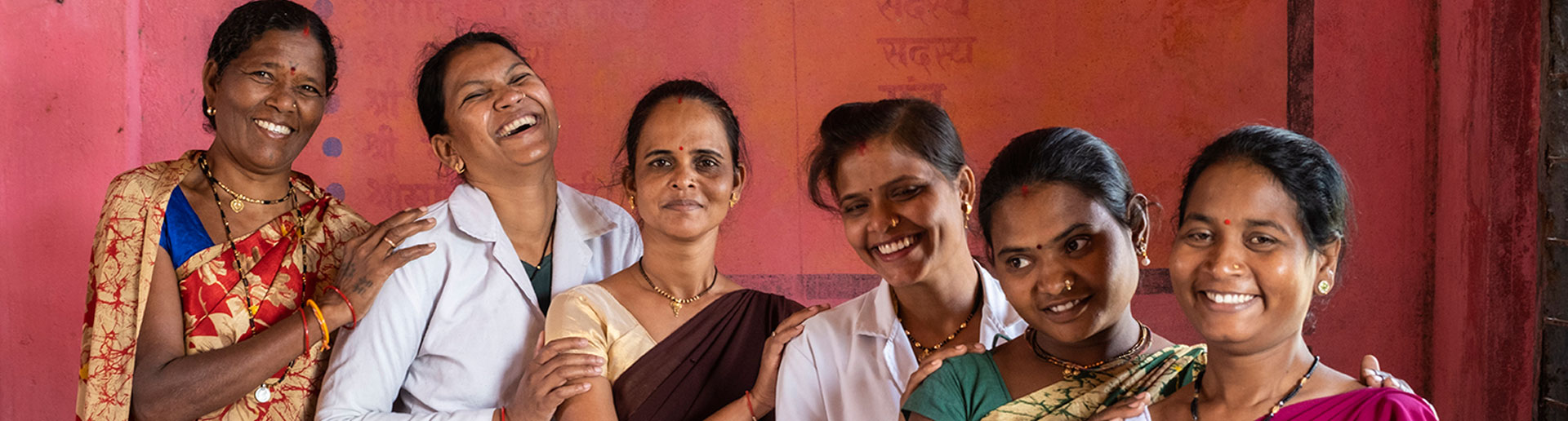
Interventions of The Antara Foundation follow two closely integrated paths: to help the government system deliver better quality health care to the community and to support the community to mobilize and seek better health outcomes.
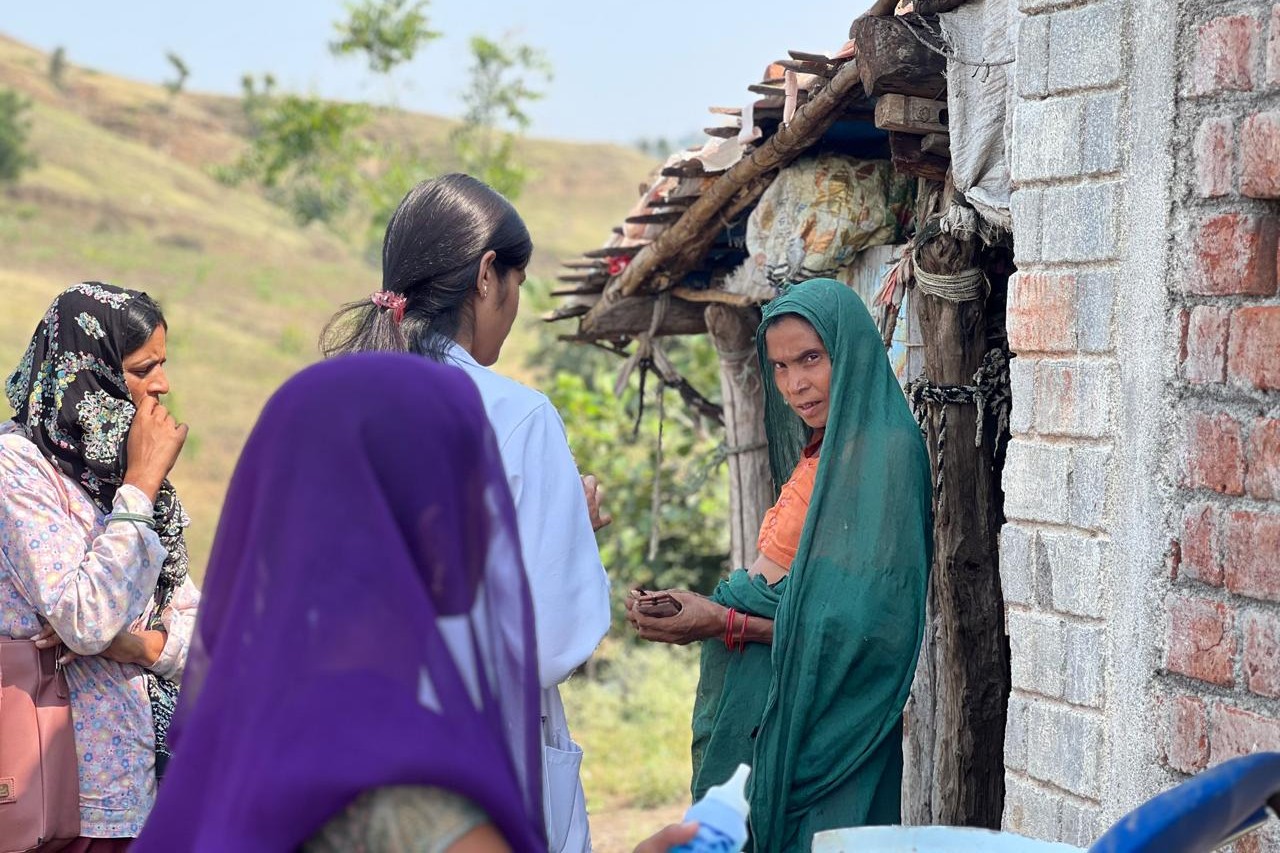
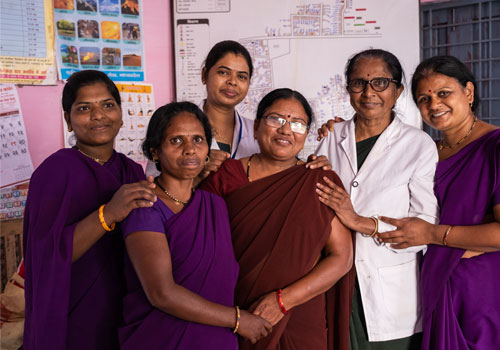
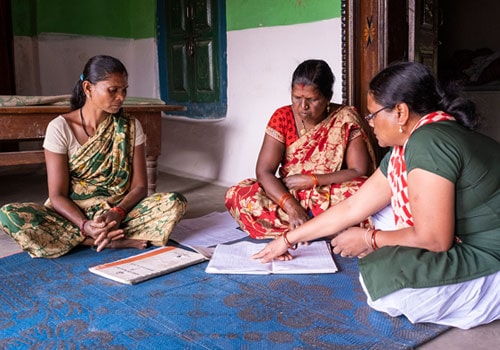
Women and children, who are most at risk, often get overlooked. We support the three frontline workers (FLWs) – ANM, ASHA, and Anganwadi workers to work as a team to identify such women and children, verify their information across departments, and prioritise and track services given to them. To do this, we build efficiency within the existing system by equipping FLWs with better tools and training, and by working with them to solve their daily challenges. In addition to the frontline workers, we work closely with their supervisors to build their managerial capacity and make smart decisions.
Weak knowledge and skills of health workers often act as a roadblock to quality care. To solve this, we provide targeted training to frontline health workers and nursing staff. This ensures the right identification and management of preventable health conditions at the village level, and safer deliveries and complication management at the labour rooms.
Socio-economic barriers such as superstitions, social norms, and lack of awareness often act as deterrents to positive health-seeking behaviour. We work with local women collectives and community representatives to improve awareness, collectivisation, and agency. Empowered communities can address these invisible barriers and ensure uptake of essential care.
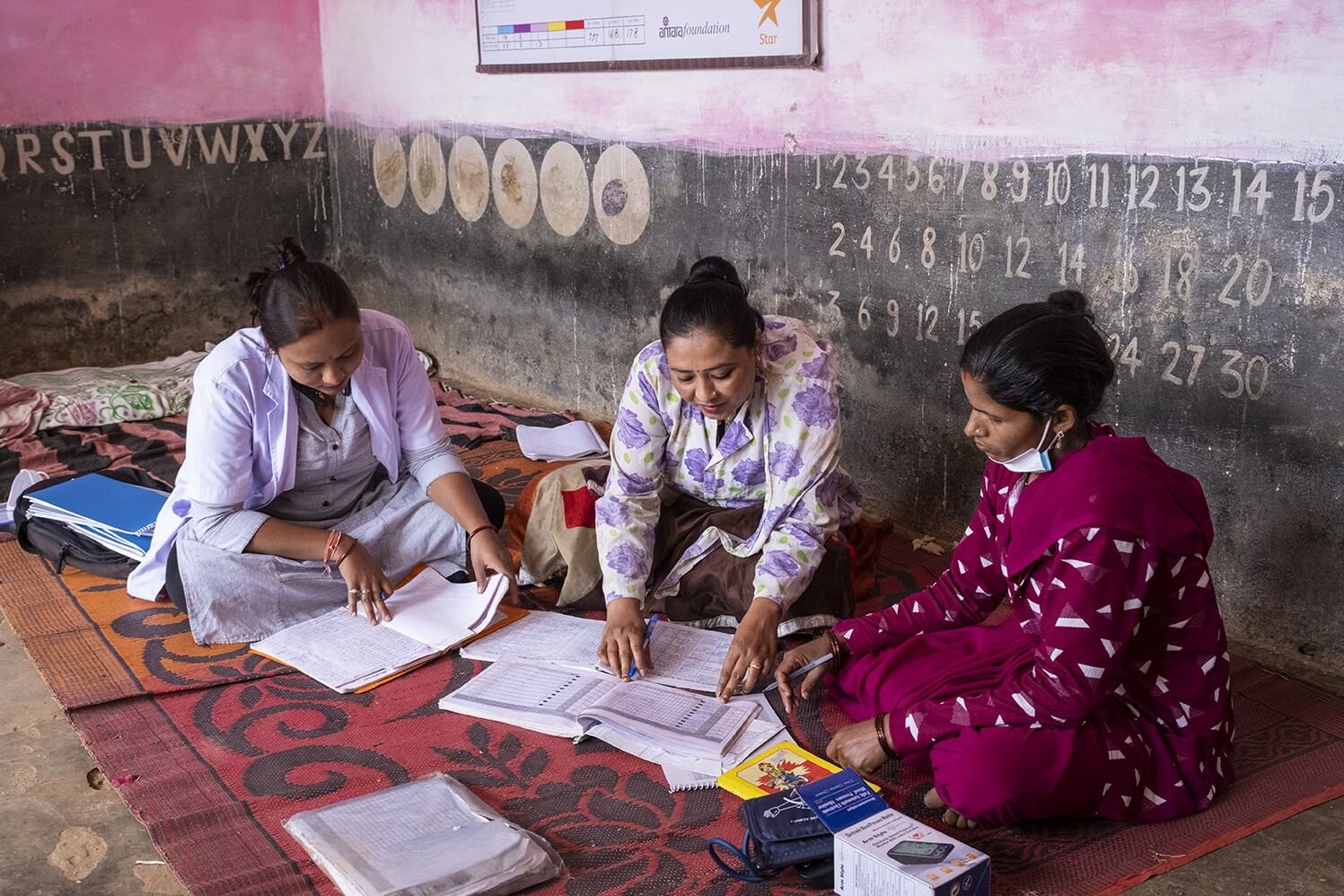
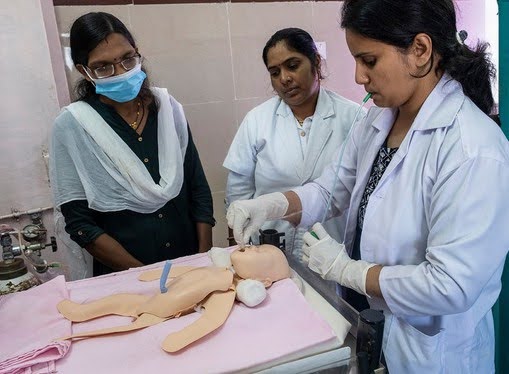
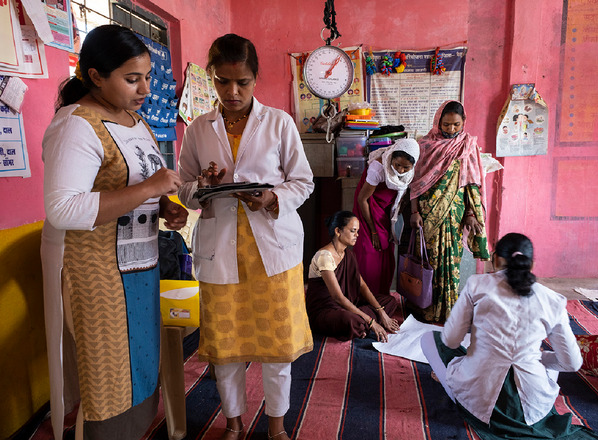
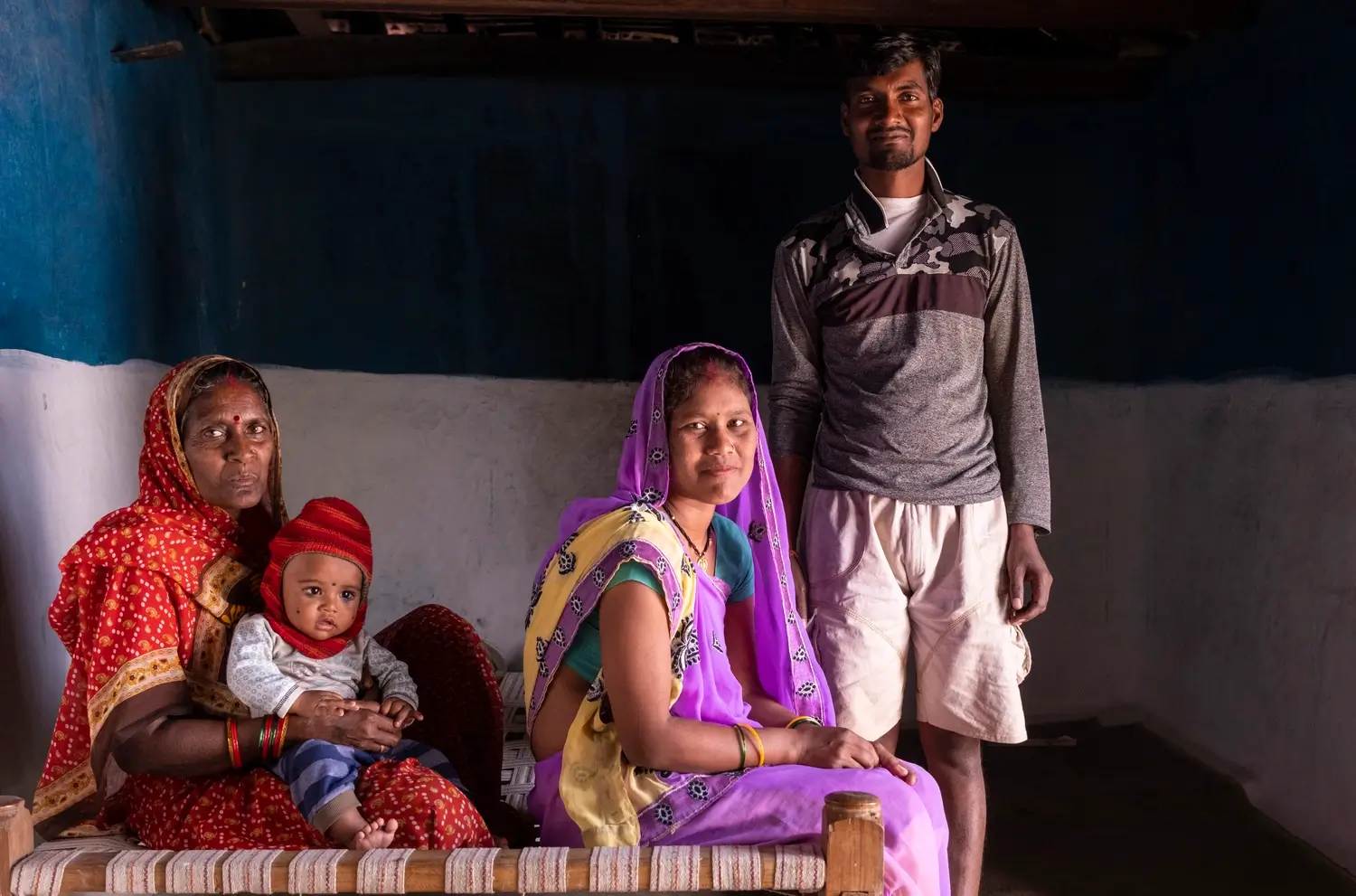
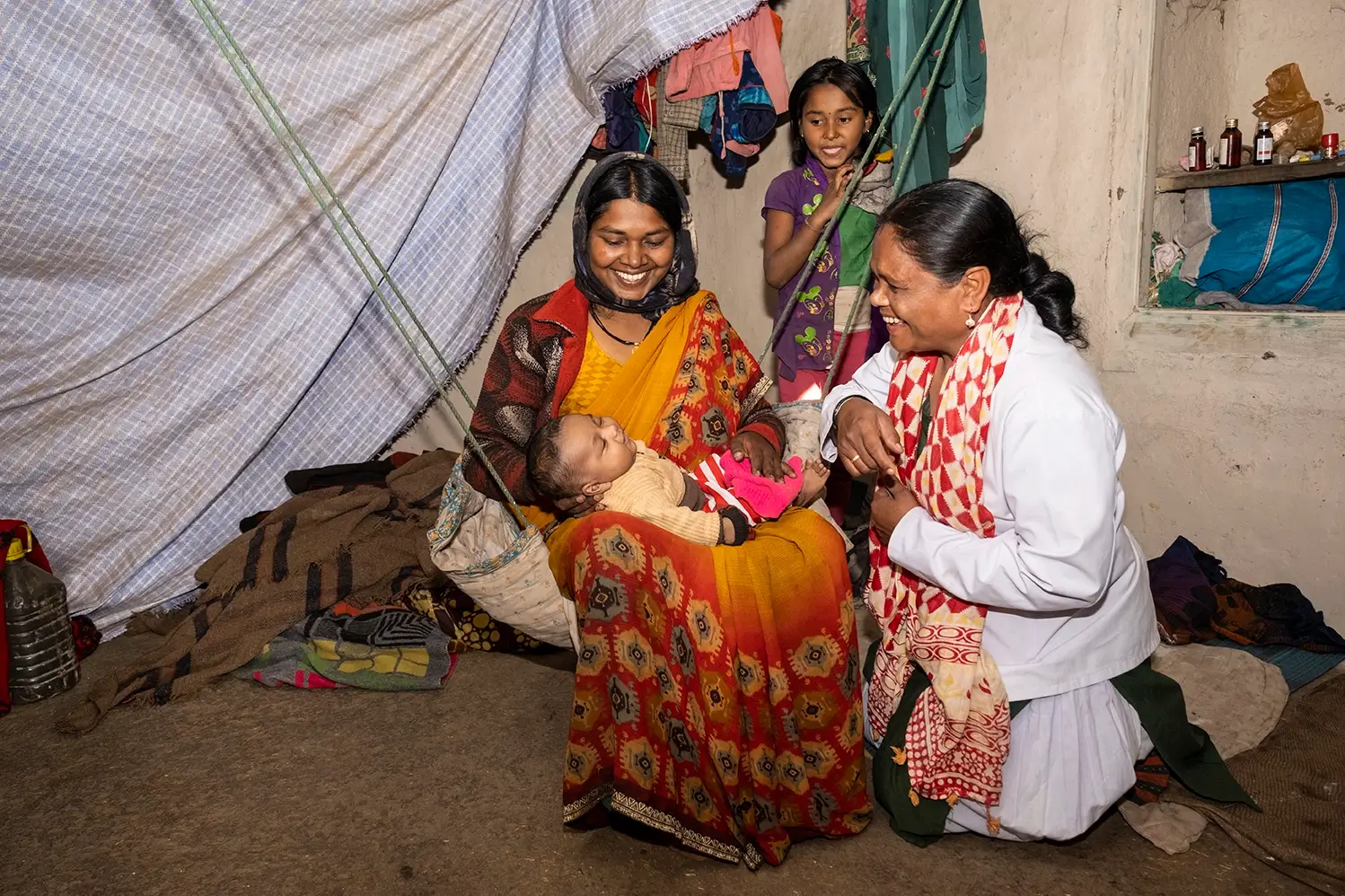
Data is at the heart of what we do. We use data to strengthen every intervention to achieve scalable and sustainable impact. Our robust in-house monitoring system generates detailed information to enable data-driven decisions.
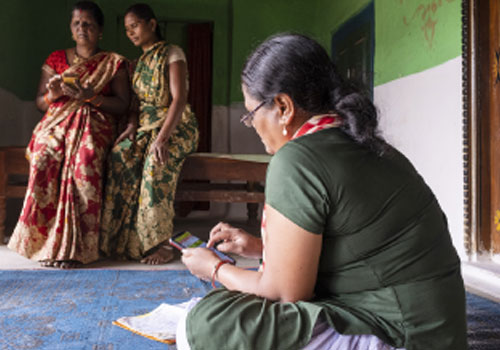
We capture data to track program implementation activities in real time. This data is used to inform the program implementation approach and identify focus areas.
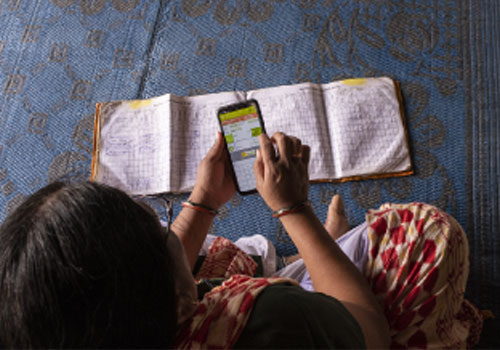
A high government leverage model is essential in utilising existing government data systems. This ensures that we do not create a parallel system and effectively use the already existing data while also gathering actionable data insights.
Our monitoring system aligns with the existing public health service delivery system to ensure that our data and insights can be easily adopted and embedded within the health system. The readiness of our model for scaling up enhances its usability by the government.

Districts

Villages

Pregnant Women (HMIS 2019-20 ANC Reg)

Lactating Mothers (HMIS 19-20livebirths + stillbirths)

Pregnant Women& Lactating Mothers

Children Under 5 Years (ICDS Dec - 2021)
AWWs, ASHAs and supervisors (Block profiles)