
Blog / / Bijayalaxmi Panda

Bijayalaxmi Panda

Published on January 15, 2026 |


Post ImageBijayalaxmi Panda

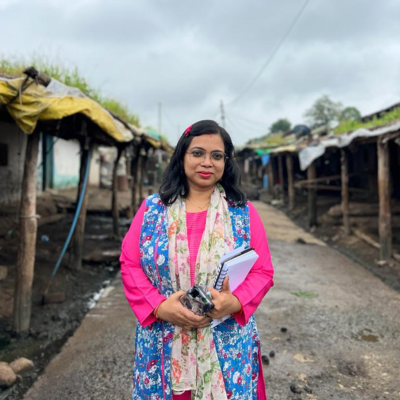
Bijayalaxmi Panda, a development professional with 16 years of experience, has worked in various states, including Delhi, Haryana, Rajasthan, and Madhya Pradesh. Her expertise spans government partnerships, research, advocacy (media and research-policy advocacy), partnership and strategic management, and community engagement in maternal-child, adolescent health, and nutrition. With two graduate degrees in Social Work and Population Studies, as well as a PhD in Social Work focused on Community Engagement and Policy Influencing, Bijayalaxmi is well-versed in her field. She also holds a postgraduate diploma in Development Studies, Urban Planning and Development, and Development Communication, as well as certificates and short-term programmes in Disaster Management, Young Women Leadership Programme, Public Policy, and Health and Nutrition. With approximately 42 publications in reputable journals, books, policy papers, position papers, and blogs, etc. Bijayalaxmi has covered a range of topics, including budget analysis, nutrition financing, elderly care, PRIs engagement, media as development partners, POSHAN programs, CMAM, KMC, and maternal, child, and adolescent nutrition. She received an award for social media ambassadorship from India at the global public health conference in Bangkok. She also represented the country coordinator from India by the International Institute of Knowledge Management (TIIKM) for a social media reel on International Women’s Day, 2024. She also presented 20 papers at national and international conferences /workshops/consultations.

In her personal life, Bijayalaxmi finds fulfilment in continuous learning, reading, writing, practising yoga and meditation, dancing, and cooking. She values her alone time and cherishes quality moments with her family.


Side note: Start the music and see her dance, expressing happiness, anger, sadness, and love as the situation warrants.


“The best solutions to complex problems often come from those closest to the issues.”