
 Tarini’s blog cover
The first time Shivani Kumari visited the villages outside Gwalior, the morning light was still soft. Smoke from someone’s chulha hung low over the courtyard, curling around a crumbling wall of placid blue. A goat bleated. You could hear the metal clang of a hand pump, then the silence after someone picks up their bucket and walks away.
Shivani joined The Antara Foundation as a Program Officer in November 2022, based in the Bijapur* block, Gwalior District, Madhya Pradesh. She was new enough to be surprised by certain things but experienced enough to hide it until she could make sense of what she was seeing. Six months in, notebook in hand, she visited the Sub Health Center (SHC), later upgraded to a Health and Wellness Center, in the village of Barfi*, home to nearly 6,500 people living in close to 630 households.
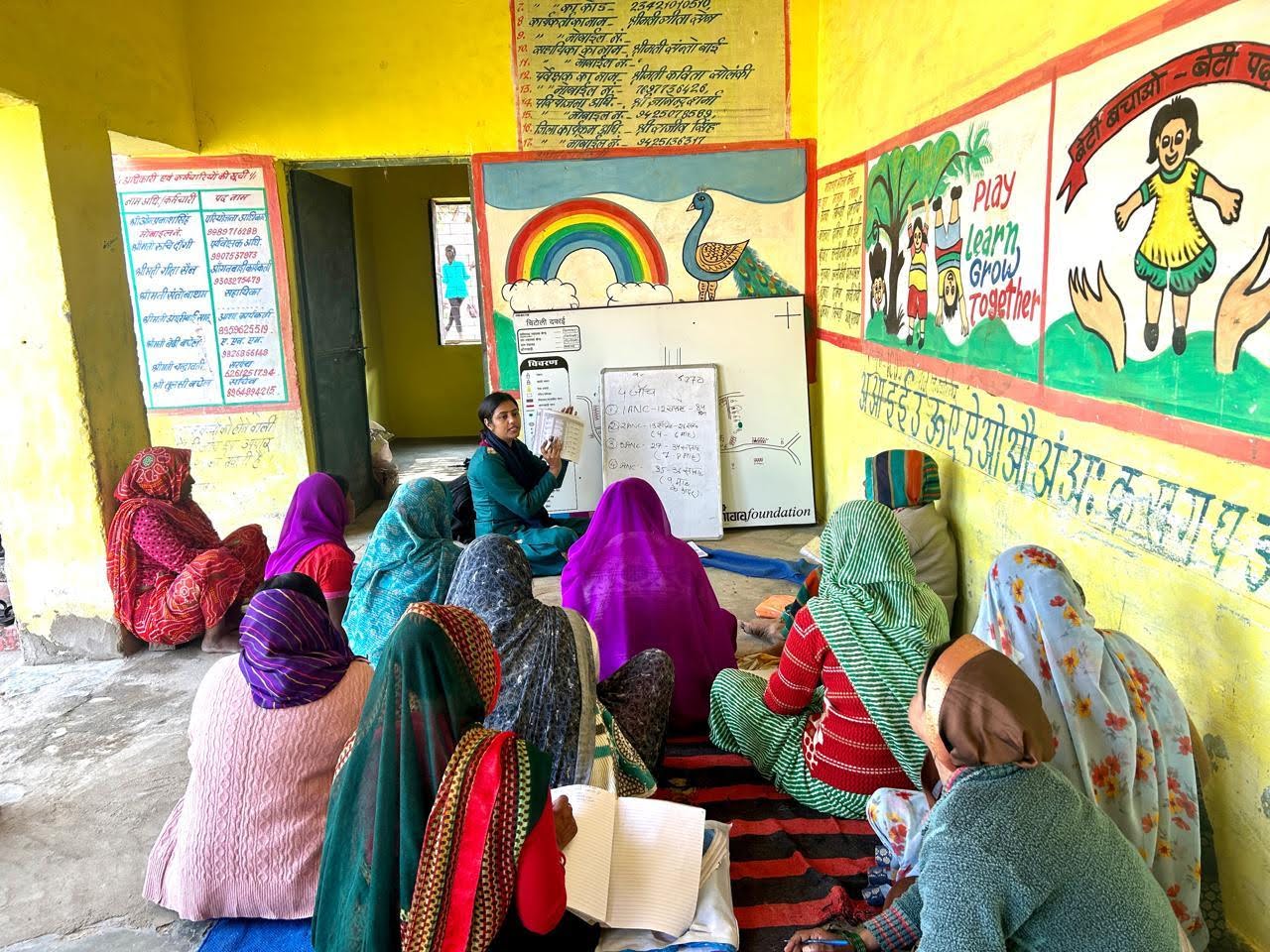
Shivani Kumari at a monthly VHSND
At the SHC, she met Rekha*, the ASHA worker (social health mobilizer), and Ram Kishan Yadav*, the Community Health Officer (CHO). They exchanged the usual courtesies of chai and a quick debrief on the week’s numbers. Then, in May 2023, they headed to the site of the monthly Village Health, Sanitation, and Nutrition Day (VHSND) held at the SHC in Barfi, and from there, to home-based postnatal care visits.
It was during one of these visits that Rekha didi mentioned something that made Shivani pause mid-step.
“Didi, do bacche hue hain. Judwa. Bahut chhote. 1,500 aur 1,800 grams. Zara socho.”
Twin girls. Born extremely low weight, only around 1,500 and 1,800 grams. Small. Dangerously small.
|
|
|
Shivani and Mujahed Shah, the Program Fellow working with her, visited the household the next day. The courtyard was neat, freshly swept. But inside, the sight was harder to bear. A new mother sat mute in a corner, eyes vacant, staring into the distance. Newborn twins on a thin cloth, barely moving. It didn’t take long to piece together what was happening: a strong preference for boys meant the mother’s husband and her entire family prevented her from caring for her twin daughters or at least didn’t encourage it. Care, nutrition, attention, all withheld. Not out of cruelty exactly, but because of a belief passed down through generations.
Later that afternoon, they visited another household where they met a pregnant woman. A black thread was tied around her belly–a traditional marker signifying pregnancy. She was under bandhej, an age-old belief that creates an invisible boundary around pregnant women, confining them at home for protection. But the trade-off for that was isolation from prenatal care. Although determining the sex of a fetus is illegal in India, sonography is common here for exactly that purpose. And once a family “knows,” the strictness of the rules seems to change. Pregnant women expecting boys face stricter restrictions on visiting the community health center or VHSNDs for prenatal checkups than those carrying girls. The belief is rooted in protection, whether from the evil eye or other unseen forces.
But that protection carried a cost: high maternal and child mortality rates in the area. Shivani learned that of the fourteen registered pregnancies in Barfi, only three were early registrations.
Back at the Sub-Health Centre, Ram Kishan Yadav, the CHO, pulled out register after register, flipping through pages filled with names, dates, weights. Together, they calculated. Only about 35% of women in the first trimester were registered, leading to the rest missing counseling, early detection of complications, iron supplements, and nutrition guidance. Not to mention the cash incentive.
The registers told another story as well. Nearly all the babies born in Barfi were extremely low-weight babies.
Shivani, Mujahed, and Rekha didi sat together and deliberated. When they brought in the Medical Officer in Charge and the Child Development Project Officer, a deeper pattern emerged. The largely upper caste Gujjar community often refused to listen to Rekha didi. In homes expecting a boy, they barred her completely.
The question became: who did they listen to?
The team decided to identify the influencers, those voices that carried weight in the village. Weeks of observation and mapping relationships pointed to one name: the traditional baba, an elder and healer, who might be the only person capable of shifting the ground beneath generations of belief.
The first visit went nowhere. The baba sat on a charpai, disinterested. Shivani greeted him, waited, spoke carefully. He said little. She left.
But she didn’t stop.
A few weeks later that same month, Shivani organized a convergence meeting of all the Women and Child Development officers, health officials, and crucially, the influencers: the baba, his supporters, teachers, and local leaders. It took effort to get them in one room. But they came. After careful negotiation and multiple conversations, the baba extended the bandhej from the household to the village boundary. This meant women could now access the SHC and attend the VHSND.
It was a significant moment. But not a conclusive one.
After the initial convergence meeting and then a subsequent one, the results remained elusive. Change, when it occurs, is usually gradual rather than confrontational. The ASHA and the CHO played a crucial role in what followed. Rekha didi and Ram Kishan Yadav continued to visit homes, speaking with the women, their husbands, and their mothers-in-law. Caste barriers still prevented direct meetings with pregnant women. But they were allowed to meet the mother-in-law instead. At the VHSND, where caste lines blurred slightly, Shivani asked Rekha didi to focus on them, discuss early registration, and prenatal counseling.
It took three to four months.
But slowly, first-trimester registrations climbed from 35% to 70%. Then, by early August, the numbers told their own story: 42 pregnancies registered, 41 of them early. Nearly every woman in the village was now coming forward in her first trimester. The twin girls Shivani had first seen, fragile, barely holding on, were back in the green zone on the growth chart. Healthy. Thriving.
And the pregnant woman with the black thread tied around her belly? She gave birth to a healthy baby boy.
Shivani works in the development practice at Ernst & Young now. She told me recently that she isn’t sure of the situation in Barfi today, whether the progress held or whether new challenges surfaced. But Rekha didi still messages her. Small questions, advice, case updates. Once built, relationships of care don’t suddenly break.
These are the moments when our work of strengthening systems through better data use, building community trust, and giving people a voice in their own care stops being theoretical and becomes real. A boundary moved. A belief stretched but not broken. A healer saw a reason to adapt. An ASHA persisted. A CHO opened his registers and helped make sense of the numbers. And Shivani, still a young professional, learned how far a conversation can travel when you don’t force it.
I often think about that morning when the first woman stepped over the old bandhej line. No drumroll, no announcement. Most often, that’s how progress happens here, through patient work that looks like nothing until it opens doors.
Maybe that’s enough of an ending. No victory lap, no tidy lesson, just a reminder that when we work with people on their terms, in their language, respecting their worlds, the path to better health opens a little. The line moves. Someone crosses.
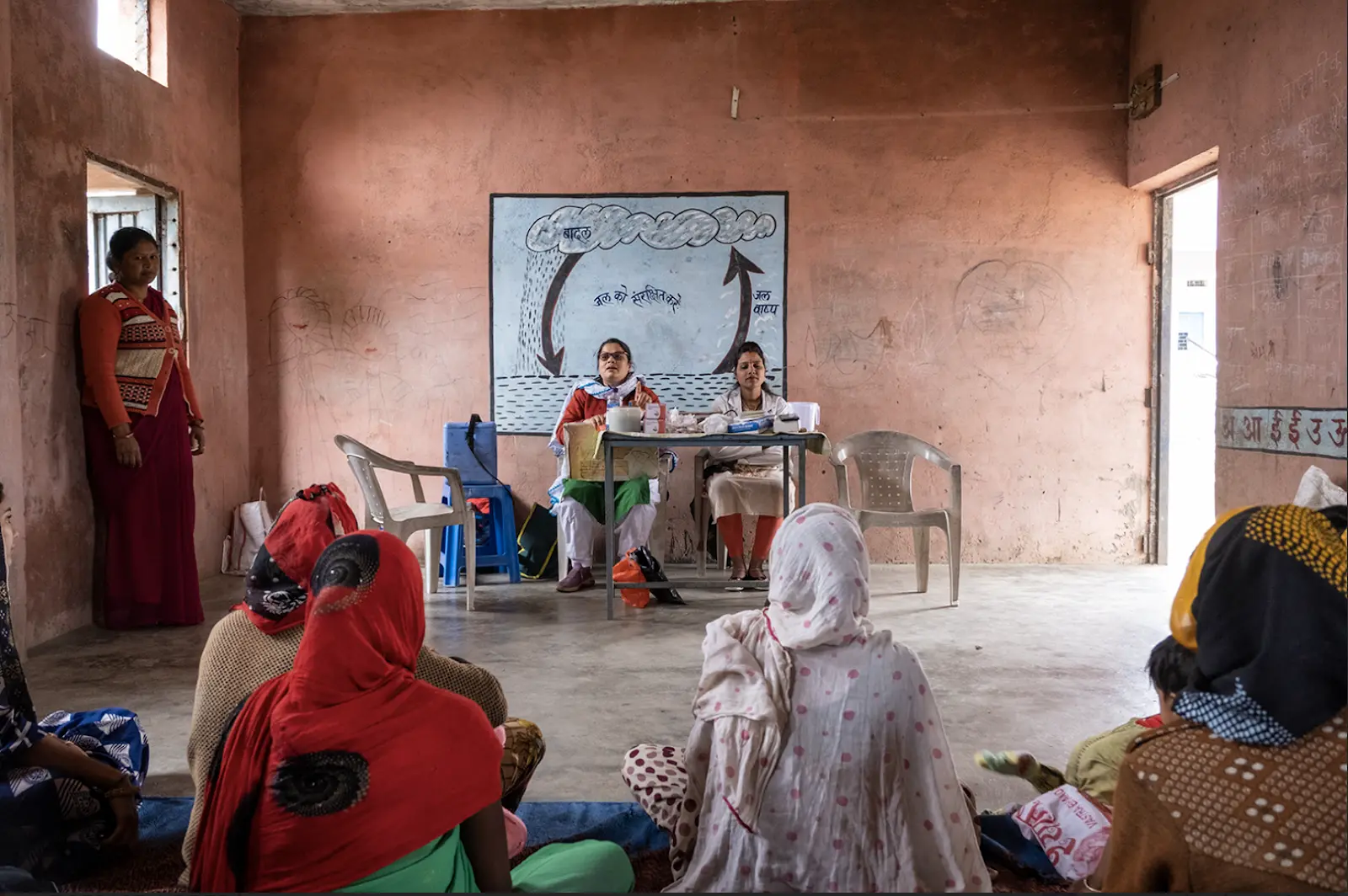 VHSND meeting (representative image)
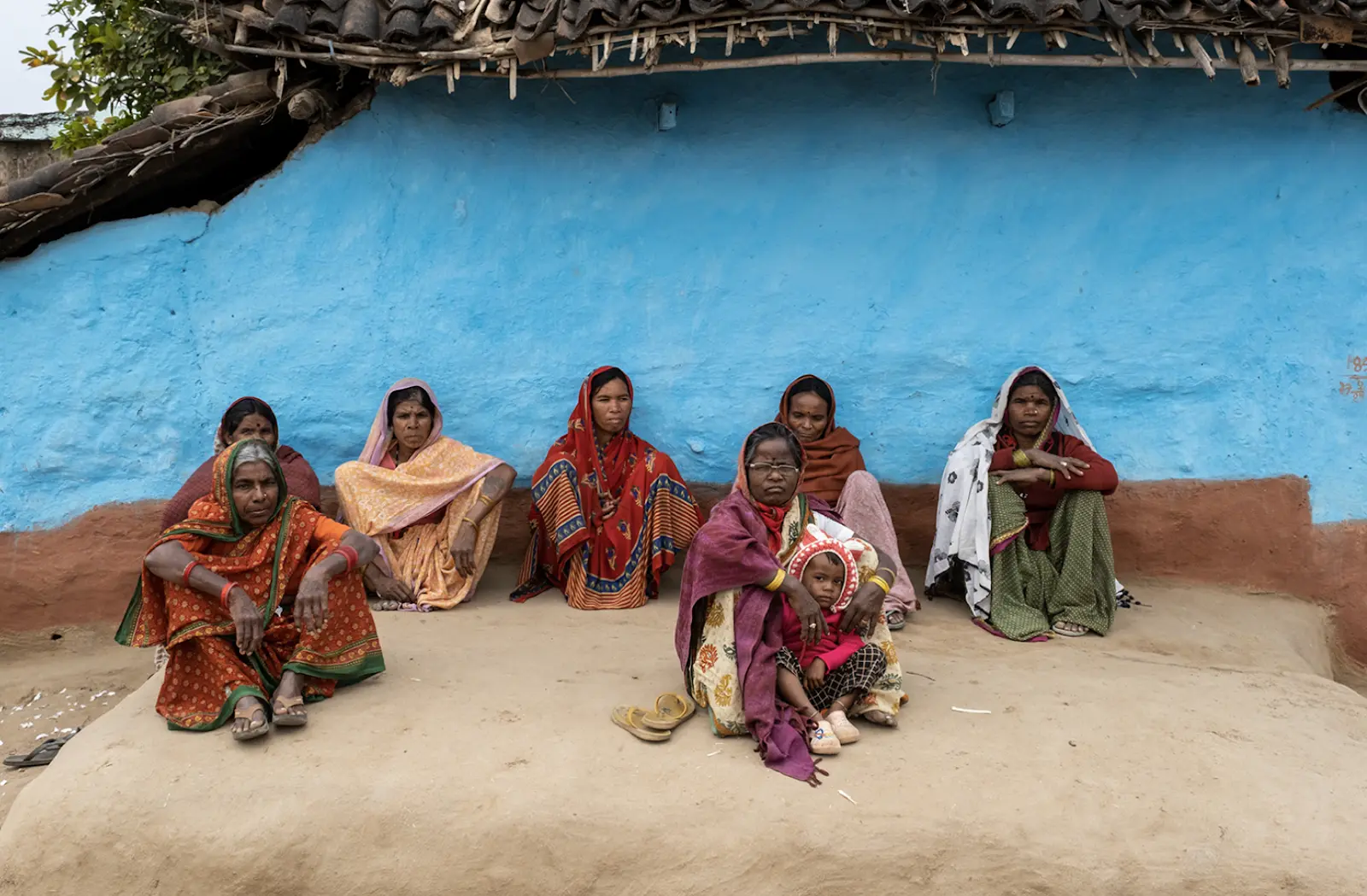 Womenfolk of the village (representative image)