
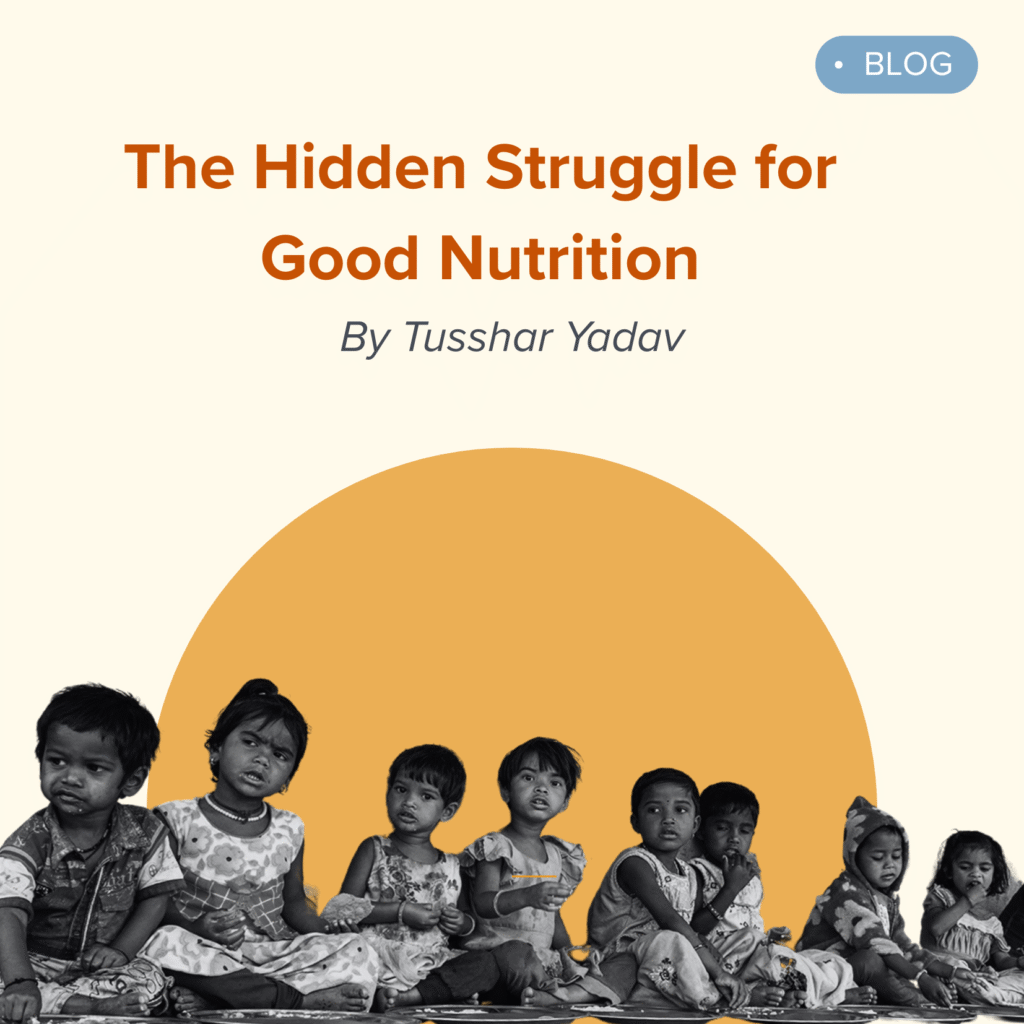
 The Hidden Struggle for Good Nutrition
Of all the challenges in the field of maternal and newborn care, nutrition often feels the most frustrating. Infrastructure gaps and data issues are difficult, yes, but they’re part of a system that, with time and coordination, can improve. Nutrition, on the other hand, seems deceptively simple and yet proves deeply stubborn.
When you walk into the home of a pregnant woman or a new mother, it’s easy to assume that nutrition is a priority—that with just a little awareness and support, families would do what’s needed. But in village after village in Chhindwara, this assumption doesn’t hold.

A Home-Based Postnatal Care (HBPNC) Visit
Most pregnant women eat only one or two meals a day, often missing out on essential macro- and micronutrients. This is likely to lead to low weight gain, anemia, and increased risks during childbirth for both mother and baby. The problem with nutrition is often a mix of good intentions matched with poor actions.
After Birth: Misinformation and Harmful Practices
Even after delivery, the nutritional care of mother and child often suffers. Mothers are told to avoid certain foods or eat less, believing it will help their bodies heal, but it hinders lactation, leaving the newborn hungry and undernourished.
Worse still, certain traditional practices, while rooted in care, can be harmful:
These well-intentioned actions can have serious consequences, like diarrhoea, digestive distress, and life-threatening malnutrition for babies whose systems are still developing.
The nutritional principle for infants is simple: only breast milk for the first six months. But the reality in the field is far more complicated.
Challenging Nutrition Narratives: Intentions, Misinformation, and Local Realities
In most families, the intention is clear: they want a healthy baby and a safe mother. The birth of a child, especially a male child, is seen as a divine blessing, though that’s a separate challenge in itself. But families often lack the accurate knowledge to act on these intentions.
Advice around nutrition usually comes from mothers-in-law, who rely on experiences from their pregnancies or traditional wisdom passed down through generations. Common beliefs include avoiding warm or sour foods to prevent post-delivery stitches from reopening; eating very little during pregnancy to prevent “overloading the stomach” or “suffocating the baby”; and avoiding “cold” foods like bananas or curd, fearing they’ll cause infections. While these beliefs stem from care, many are outdated or even dangerous. Our job, then, is not to dismiss them outright, but to gently introduce better, evidence-based knowledge
To truly improve nutrition, we must start by meeting people where they are. Telling a family that struggles to afford basic staples to start eating ghee, milk, and imported fruits is not just ineffective—it’s disrespectful to their reality.
Instead, we must promote what’s affordable and accessible. In Chhindwara, this means:

A Program Officer from the Chhindwara district is counselling FLWs on nutrition knowledge
Nutrition advice that acknowledges financial, seasonal, and cultural constraints stands a far better chance of actually being followed. It’s not about imposing new habits; it’s about building on existing ones.
Speaking the Local Language: Literally and Figuratively

ASHAs and Anganwadis participating in their monthly meetings
Changing beliefs takes more than facts. It takes storytelling, the kind that connects new ideas to familiar experiences.
When we compare breastfeeding to watering a plant or explain the importance of a mother’s nutrition by drawing parallels with feeding cattle to produce milk, it may sound simplistic. However, in the field, those analogies are effective. They tap into everyday wisdom and help communities see new ideas as extensions of what they already value.
This approach—respectful, relatable, and rooted in local experience—creates space for new thinking without threatening deeply held identities.
A Long, Local Fight
The fight for better nutrition is far from over. It’s not a sprint; it’s a slow, ongoing effort to help families make small, sustained changes. The journey demands not just information, but patience, cultural sensitivity, and trust.
This Poshan Maah is another reminder of how crucial this fight is and how we must win it gradually, thinking locally. True change comes not from imposing outside strategies but from walking alongside families: one conversation, one belief, and one meal at a time.

A baby’s portrait from Chhindwara
Tusshar Yadav has dedicated over a year to The Antara Foundation, focusing on maternal health and systems strengthening programs. Holding a Social Sciences degree from TISS, his work emphasizes the role of public policy as invisible infrastructure responsible for socio-economic development. He believes promoting social equity is essential to addressing nutritional challenges.