
 Dinesh Blog cover
Frontline workers (FLWs) continue to deliver essential services in some of the most remote parts of the country, even under extremely challenging circumstances. They often set aside their own struggles to serve others. During a priority field visit to Kare Aam, a village slowly progressing on various health-related indicators, I witnessed a real-life example of this commitment.
This village is in the Tamia Block of Chhindwara district, Madhya Pradesh. The long, rough road leading to it hinted at the realities that lay ahead. Other than the challenges, what stood out was the deep engagement of FLWs, carried out without complaint. Because they knew their work was invaluable to the communities they served.
Kare Aam Rated is one of the twelve villages of Patalkot, a deeply forested valley known for its geographical isolation and rich biodiversity. Until a few years back, Patalkot existed as a world of its own, with little outside influence.
The Bhariya community, a Particularly Vulnerable Tribal Group (PVTG), has lived here for generations. PVTGs are indigenous communities that face significant socio-economic challenges and are at a higher risk of marginalisation. With road construction and the government’s ongoing efforts to mainstream them, the villages have now been mapped to various Health and Wellness Centres (HWCs) to provide them with public health services.
Around 600 people from the Bhariya community are covered in the Gram Panchayat of Kare Aam Rated, which has two small villages: Kare Aam and Rated. There are two Anganwadi Centres (AWCs), one in each village. This gram panchayat is located almost 80 km from the district headquarters and about 32 km from its attached HWC. Typically, a village must have an HWC within a 30-minute distance, considering geographical and accessibility challenges, as per IPHS Guidelines.
With terrain so difficult that even a motorbike cannot easily cross, Kare Aam Rated makes the delivery of primary healthcare services particularly challenging for Auxiliary Nurse Midwives (ANMs) and Community Health Officers (CHOs).
On the Village Health, Sanitation and Nutrition Day (VHSND), the ANM had to travel 32 km on her husband’s motorbike with her 5-year-old son. She could not leave her son at home because it would be late in the evening when she returned. For the same reason, her husband usually waits for her to finish her work before bringing her back safely through the forest.
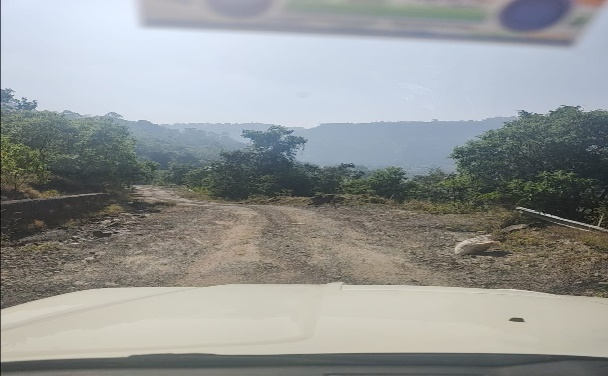
Figure 1 Road to villages of Kare Aam Rated
With terrain so difficult that even a motorbike cannot easily cross, Kare Aam Rated makes the delivery of primary healthcare services particularly challenging for Auxiliary Nurse Midwives (ANMs) and Community Health Officers (CHOs).
On the Village Health, Sanitation and Nutrition Day (VHSND), the ANM had to travel 32 km on her husband’s motorbike with her 5-year-old son. She could not leave her son at home because it would be late in the evening when she returned. For the same reason, her husband usually waits for her to finish her work before bringing her back safely through the forest.
The CHO also had to travel to this village with all essential supplies, especially for the treatment of moderate anaemia, as it was difficult for pregnant women there to reach the HWC.
There is no Accredited Social Health Activist (ASHA) appointed in this village, so Anganwadi Workers (AWWs) assisted the ANM during VHSND sessions. Both AWWs have only studied up to fifth grade. They had difficulty completing registers and using smartphones, which affected documentation and limited their outreach. As a result, children may be listed in records but may not always be able to attend services.
To ensure no children or mothers are missed, the ANM regularly treks through the village for door-to-door vaccinations. She utilizes her home visits to meet married women and note their last menstrual period. This is part of a survey to identify pregnancy early.
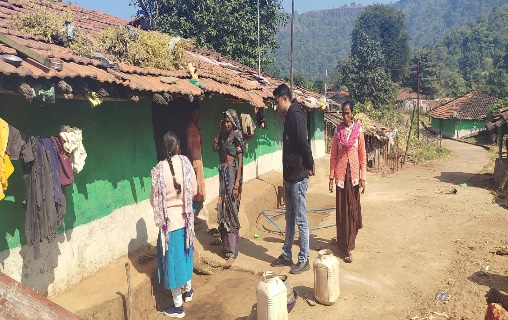
Figure 2: ANM is conducting the Last Menstrual Period (LMP) survey
When I joined the FLW team on home visits, I could sense the hesitation among girls, mothers, and family members in seeking services.
I met Rachna, a young girl from the village. She had studied up to eighth grade at a residential junior school in Bijori village, about 40 km away. She had to discontinue her education four years ago because there were no high schools nearby. Rachna shared that while she was in the hostel, she regularly received iron tablets but had not taken any supplements since dropping out. This gap in adolescent health services for out-of-school girls was worrying. I asked the ANM and AWW to also check for supplement consumption during their rounds.
During the survey, I met pregnant women who already had more than two children, yet their names were not linked to their husbands’ Samagra IDs. This meant they were not part of the government’s online database and could not access the financial support to which they were entitled.
The Gram Panchayat is scattered across hilly forested terrain. Traditionally, pregnant women have preferred to deliver at home. Some women, even today, are left with no other option. Either the phone doesn’t connect due to sporadic network coverage, or the ambulance drivers stop the vehicle 6-7 km before the village and refuse to come down the hills along the rocky, uneven roads. Monsoons worsen the situation, causing waterlogging that restricts movement.
I met mothers who had given birth at home with only their families to help. They mainly rely on traditional healers, as the hospital is too far and difficult to reach.
The ANM is hopeful that things will change, even if it takes time. Until then, she is committed to providing the support needed to connect mothers and children to the mainstream public healthcare system. The villages of Patalkot show potential for change. The system can ease service outreach to these villages by remapping them to closer HWCs.
Such stories underline not only the immense dedication of FLWs but also leave me wondering: how can the public health system strengthen last-mile service delivery in geographically challenging villages like Kare Aam and Rated, so that frontline workers feel supported while ensuring that no community is left behind?